
Chivalry and Human Limits
Sir Gawain and the Green KnightThis thread examines how the poem tests noble ideals against fear, desire, and the need for self-preservation.
increasing Bearing strength in each event
 decreasing
Bearing strength in each eventdecreasingThe Virtuous Ideal
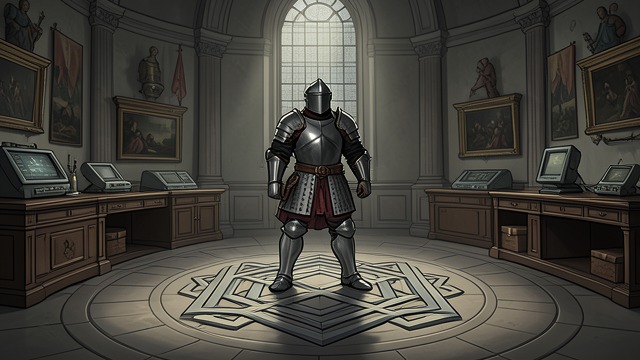
The Virtuous Ideal
A Joined Pattern
The pentangle presents Gawain as faithful, courteous, generous, and disciplined. Its interlocking form suggests virtues that should support one another.
An Ideal Under Examination
The story will test whether such virtues remain joined when survival is at stake.
Courtesy in Conflict
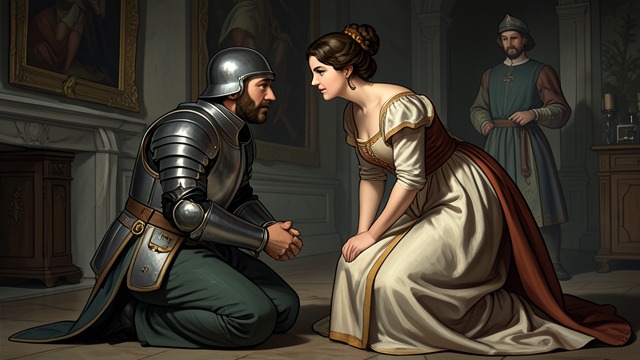
Courtesy in Conflict
Competing Duties
Gawain tries to honor Lady Bertilak’s requests without betraying his host. Courtesy does not provide a simple answer.
Virtue as Negotiation
His manners are admirable, but they must be balanced with fidelity and truth.
The Limit of Courage
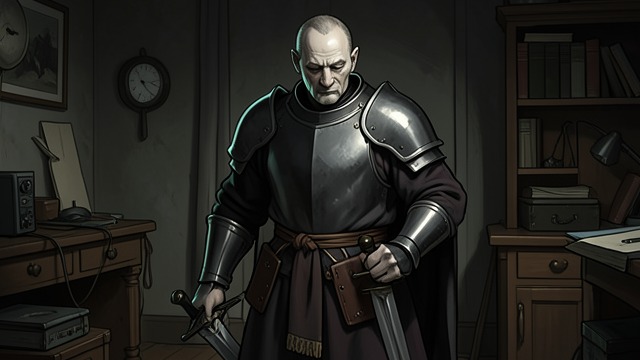
The Limit of Courage
Fear of Death
Gawain accepts the girdle because the promised return blow threatens his life. His decision exposes the bodily limits beneath heroic confidence.
A Human Compromise
The poem treats the motive as understandable without pretending it is morally neutral.
The Wound as Measure
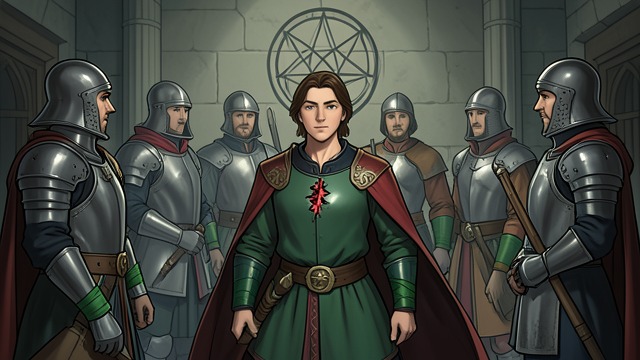
The Wound as Measure
A Small Consequence
The Green Knight’s cut marks Gawain’s concealed breach, while the withheld swings recognize his earlier honesty. Judgment is differentiated rather than absolute.
Virtue Reassessed
The knight is neither perfect nor wholly false; the wound measures a limited failure.
The Community’s Mercy
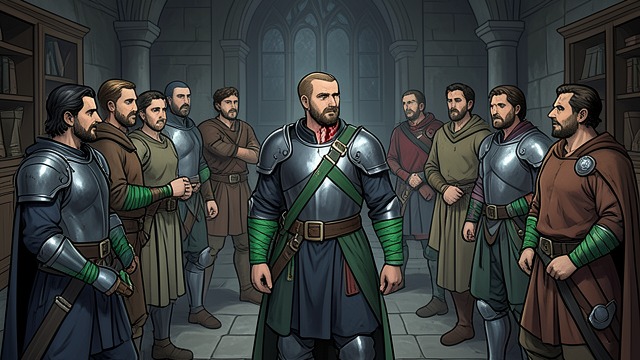
The Community’s Mercy
Confession Received
Gawain tells the court what he did, and the knights answer with a shared green band. His mistake becomes a basis for understanding.
Ideal Made Livable
The community preserves chivalric aspiration while acknowledging that people can fall short.
Before the quest begins
The mornings at Bertilak’s Castle
The third morning at Hautdesert
At the Green Chapel
After Gawain returns to Camelot
